Tuesday, January 29, 2013

The Best Game Ever


About three years ago, I came up with my very own icebreaker question: assume you had access to all the resources you would possibly need (money, talent, etc.) to make a video game, so whatever you make, it'll be pretty much the best possible product. What kind of video game would you make?
This question has now become mostly irrelevant to me for two reasons. First, I just got as a gift "Hypertheticals" by Chuck Klosterman, which is 50 ridiculous icebreaker questions in one convenient box.

The second, more important reason, is that someone beat the question. This someone is Austin Bening, so all credit for this idea should go to him. I'm just writing it up here for posterity, so future generations with the capability and balls can follow through on the idea. As it stands now, it's a total pipe dream, but it's a very, very fun one. What follows is the pitch:

Raise your hand if you've ever played Guitar Hero. Any Guitar Hero.

Now keep your hand raised if you still play Guitar Hero. (For purposes of this demonstration, you'll have to pretend there are a bunch of people with you who raised their hands for the first question, then lowered them for the second. Meet me halfway, that's all I ask.)

There are a ton of games this applies to. Games that we remember fondly which, for whatever reason, we just don't play anymore. Maybe we don't have the time, or we don't want to tarnish any nostalgia we might have for them. But they're still great games, and we still want that experience of playing them, even if we don't have the dozens of hours required to sink into them to get to the really good bits. And even then, there's no way to recapture that spark that happens the first time you ever play the game. The sensation you get of winning that first battle or race, or nailing that particularly tricky solo that makes you fail the song every damn time. That's more or less where this idea is coming from.

In short, the best game is the game that essentially is all the really cool games you know and love mashed up into one long, super varied game. If you were to try and make a game that combined the rock-offs of Guitar Hero with the thrill of coming from behind to win the world cup in Fifa, you'd fail, because those would require two completely different teams with completely different design philosophies. But you don't need to, because those games already exist.

Basically, the game would look like this. You'd download the main game, which would take the form of an overarching narrative tying all this together. This could be a super meta, "game world" type thing, but I think it would work much better if you just made it basically Scott Pilgrim. That is, have it take place in a world where all this ridiculous, over the top stuff happens just as a matter of course. The player character could be a Buckaroo Banzai type figure, who is a genius master swordsman and gunfighter who is also in one of the most popular rock and roll bands ever, and in his free time competes in pro sports and street races, winning all of them.

The bits from other games would take the form of downloadable content for those games, pretty much just extra levels that you would play when you got to that part of the story. If you didn't have the game (or in the case of Guitar Hero, plastic controller), that's where a social element could come in. It would be up to you to track the games down, and if you'd never played them before, it would give you an excuse to discover them for the first time.

The reasons why it's a pipe dream are obvious: licensing alone would sink this thing right out of the gate, as well as finding ways to develop for games whose studios have gone belly up or since moved on way beyond their older productions. But it's such an enticing idea that it's still really fun to think about. In short, you don't have to make the best game ever, because it's already been made. It's just spread out over all these different games. Looking at it another way, it would one big old celebration of the medium by looking at the best of what this console generation had to offer, and presenting it all in one fun, hyperkinetic package.

Tuesday, January 15, 2013

Video Games and Satire: NOPE

This will be a quick sort of follow-up to the last post, but I feel like it's still worth it to bring this up. So apparently, Far Cry 3 was supposed to be a satire, but it didn't work. At this point, I'm reminded of something my instructor said to me years ago when I used to practice Tae Kwon Do: if you're practicing a technique with the class and you notice everyone else is doing it differently than the way you're doing it, there are two possibilities. Either you're the only person in the whole group actually doing the move the correct way, or you're doing it wrong. Which is more likely?

Having played it, I can safely say that John Walker's assessment in that first interview is correct: the game doesn't work because we're conditioned to expect first-person shooters to feature over-the-top, clunky narratives. It's kind of a given for a genre predicated on the player mowing down lots and lots of dudes over the course of the experience. But from the way the writer is talking about it, it doesn't seem like this is the sort of cop-out Tommy Wiseau pulled with The Room, namely a retroactive attempt to cover his ass. It really does seem like the original intent with the game was to produce a satire of first-person shooters, or perhaps even violent, "gritty" video games as a whole.

The thing about satire is that it has to walk a fine line, and that requires subtlety. And with Far Cry 3, along with arguably Max Payne 3 as well, nuance is going to be very hard to pick up on. To be sure, this is partly because players aren't expecting to find any in big budget titles like these, but something has to be said for presentation too. It's not that players aren't receptive to nuance and satire, it's just that these elements are bound to get lost in a work where the player's primary interaction is shooting a bunch of similar looking "bad guys", which they'll do dozens of times over the course of the first half hour of play. For satire to be effective, it should only fool a fraction of the people exposed to it, not the majority. When that does happen, as with Far Cry 3, you're left with a game that just feels clunky, trying to comment on something without ever making it clear what it's trying to say.

I feel like I'm sort of retreading the ground I covered in the post I linked to above concerning the merits of Max Payne 3 versus Spec Ops: The Line and which one better confronted the inherently ludicrous nature of video game power fantasies. But that's kind of just because Far Cry 3 sort of serves as a more high-profile counterpoint in the argument. Spec Ops resonated because it made itself clear about its intentions. And we can argue all day about the artistic value of that as opposed to a more nuanced approach, but the fact is that it resonated in a big way, while Far Cry 3's narrative has gotten a mixed response. Games are at a weird spot now, where the desire to tell a deep story with a real impact is crashing up against a bunch of mechanics that can undermine the whole endeavor from the start. While Spec Ops drew attention to how crazy the mechanics were, Far Cry 3 didn't, or at least didn't do it well enough, leaving a bunch of people scratching their heads, which apparently isn't the response that Jeffrey Yohalem was aiming for.

As for me, I must admit: the game was a hell of a lot of fun. It was basically an RPG that played as a shooter, and it did a very good job of giving the player freedom to play how they wanted and explore a vast, open world. It also had some really awesome sequences where the player character got to trip balls and go on vision quests, which, when pulled off well, automatically qualifies the game for at least 3.5 stars out of five (This is on the Sam Scale, a.k.a. the only one that matters). Story-wise, yeah, it was a mess, but at least it was an entertaining one.

Tuesday, January 8, 2013

Giving the People What They Want

So I haven't beaten Far Cry 3 yet, but I've made a good amount of progress with it. Enough to already get the central tension that the game is structured around. The setup goes like this: you, Jason Brody, and a few other of your rich white friends are on vacation, but when you go skydiving over the Rook Islands, you all end up captured by Vaas and his merry band of human traffickers. You and your brother manage to escape, but your brother is killed in the process. Now it's up to you to become a super badass in order to bring down Vaas and save your friends, which is mostly accomplished through copious amounts of tribal tattoos and drugs.


"I haven't done sambuca since I was twenty!"

The key element here is that you aren't supposed to project too much onto the player character. Jason Brody has a voice, a bit of a backstory, and a clear motivation which he frequently brings up, as would most people in a similar situation. So as you transform into a killing machine, your friends notice it. They comment on it, and they aren't awed by your presence and skills. They're deeply disturbed by it. An awesome car chase after you rescue your girlfriend, Liza, where you blow up pirates with a grenade launcher is seen by Jason as just that, an exciting experience. But all his cries of "Awesome!" and "Did you see that?"are met by Liza (the driver) recoiling at how he could find any of this fun. For her, this is a nightmare. For Jason you, this is a thrilling set piece with a brand new toy that gets you a bunch of experience points for new skills.


Again, I haven't beaten the game, so I can't say if there's a satisfying payoff for this conflict. I might have to revise what I say here if it manages to somehow mess it up beyond belief. But in any event, the fact that this is the defining conflict at all made me realize something. Though it might not be all the rage, deconstruction is very in vogue when it comes to popular entertainment. Two of the most popular game franchises, Assassin's Creed and the bro-iest of bro shooters, Call of Duty, use their latest installments to question what drives the people the player is fighting for. ACIII featured the most sympathetic bad guys of the series, and by the end of the game, the main character Connor is thoroughly dissatisfied with the way things have gone, but finds there's pretty much nothing he can do about it. Whereas the first Call of Duty: Black Ops felt mostly like a scenic tour of the Vietnam War, Black Ops 2's missions in the late eighties feel much more like a highlight reel of questionable American foreign policy decisions. Rather than pegging the villains as an amorphous blob of evil Russians, we're given a legit antagonist, who has pretty clear motivations and is sympathetic to boot.

The "bad guy" and his burned, crippled sister

To be sure, there are plenty of works that comment upon themselves, usually for the sake of comedy, and it isn't like deconstruction is anything new when it comes to fiction. But when you start talking about pop culture, that's where things get interesting. Because as I see it, the last year has seen a startling amount of self-aware works, pieces of fiction that attack themselves or even the viewer. Obviously, Spec Ops: The Line comes to mind, but it's definitely not the only thing, or even the most visible thing, to partake in this trend.

I haven't seen Cabin In the Woods, and before you start, yes, I know I should, but that isn't the point. I have read up on the plot and what it does, though, and that's enough to make it clear that the movie is almost explicitly about confronting the demands of the audience. A group of teenagers are herded to a remote spot in the woods to get offed one by one in order to satiate the demands of the Old Gods who will tear everything down if they don't get what they want. (Hint: That's supposed to be us, watching the film). The movie, which got a wide release and was fairly popular, was all about critically examining why we like horror movies and what we get out of all the slaughter. As good ole Film Crit Hulk puts it, "JOSS WHEDON AND DREW GODDARD JUST DROPPED THE FUCKING MIC ON THE HORROR FILM".

Django Unchained was a very interesting movie, and though I don't think it was Tarantino's best, it definitely isn't a bad film by any stretch, or even a mediocre one. And it doesn't resemble any of the other period pieces of the civil war, which try to present a more nuanced version of events. In this movie, you could count on one hand the number of white people in the cast who end up doing anything remotely noble. Every member of the aristocratic, slave-holding class is presented as an avatar of excess that uses genteel language and customs hand in hand with absolute brutality. And by the end of the movie, the black hero gets to kill them all in a rain of blood, tearing down the whole structure without regard for offending anyone's sensibilities. From what I've heard of it, Zero Dark Thirty, rather than simply glorifying the members of Seal Team Six and their actions, delves into how we got to that raid, and the numerous grey areas we had to go to morally to get the information. Rather than bland, easy heroism, it strives to depict a vision of reality.


As far as I can tell, the reasons for why this trend was so much more widespread last year than in years prior are twofold. First, we live in an age of unparalleled media saturation. Thanks to Netflix, direct download services like Steam and iTunes, and our good friend online piracy, it's now easier than ever to simply immerse yourself in stories, and doing this is enough to get one intensely familiar with the tropes and techniques writers employ time and time again. These works are successful because now so many people are familiar with them that the audience can be that much more responsive when someone decides to comment on them in depth. Going back to Tarantino, you could argue the roots for this were laid down with Inglourious Basterds, a film that took America's go-to bad guys, the Nazis, and used them to examine how violence in cinema can make us demonize entire swathes of the population and how war can bring out the worst in everyone, even the supposed "good guys".

Second, there's the fact that people now just aren't as responsive to the standard good-vs.-evil conflict as they used to be. In her review of The Fellowship of the Ring, the Nostalgia Chick points out that the movie, coming out on the heels of 9/11, presented audiences with a brand of escapism that was in very high demand. The good guys all look pretty, while the bad guys are genetically engineered to be evil. Fast forward ten years. Rather than the monumental struggle between the enlightened forces of good and the "Islamofascists" that Rumsfeld and Cheney were prepping for, we got to experience a slog, where the enemies didn't wear uniforms and the fact that we did just made us vulnerable. There was no caricature we could slap onto a poster and label the enemy. And it turns out we were willing to torture our captives too, not to mention engage in the same sort of bombing campaigns we were initially afraid of being subjected to. It's not hard to see how doubt could creep into the picture, and once those attitudes become imprinted upon the culture, it's not surprising they would seep into our entertainment as well. The world is a very different place from the way we would like it to look, so naturally, we're starting to get movies and video games that reflect that, that dare to ask why we'd even want it to look that way in the first place.


So naturally we're led to the next logical question. Why? What has led all these creators to produce works that are so much more self-aware and critical? I don't think you can just peg it down to cynicism, because that's not quite what we're experiencing. Rather than simply wanting to get to the core of these experiences just so they can conclude they're full of shit, all these films and games seem to be more concerned with getting to the roots of these genres and stories so that we can engage with them more meaningfully. They're a way of criticizing the culture from within, of indirectly asking what sort of people could find all this bloodshed entertaining on such a massive scale. They're a reaction to a reaction. The easy escapism offered by works after the attacks of September 11th was by no means unwarranted or even necessarily a bad thing. But it has become so widespread, and so easy to simply embrace it all the time without seeking more nuanced alternatives, that it's only natural that it would produce a backlash.

It's entirely possible that these movies and games are just another step in a cycle. Escapism will probably come back into vogue at some point, because there's always going to be room for giant robots punching things. But these works have come in such a dense concentration, and have been so unflinching in defiling the proverbial sacred cows of their genres and mediums, that there's reason to hope there will be a more lasting effect produced from all this. Maybe I'm still just playing my role as the eternal optimist, but I find it hard to believe that the democratization of information and creative tools could somehow lead to a dumber public, one less willing to appreciate nuance in their entertainment and culture.

Monday, October 1, 2012

"You're Here Because You Wanted to Be Something You're Not"

Over the past couple of weeks, I've seen my evangelical efforts pay off, and my roommate has completed Spec Ops: The Line. Naturally, this resulted in a lengthy conversation among me and my housemates about the game and what it's trying to say, because that's the kind of guys we are. The main division was between me and another housemate. He hadn't played the game but had watched it being played, and we managed to describe the game's revelatory ending so that he basically got the gist of it, and was by no means uninformed going into the discussion.

His argument basically boiled down to the fact that the game was disingenuous. It was made to be profitable and still operates like pretty much every other military shooter out there, built around the same core positive psychology gameplay loops that reward kills. In the case of Spec Ops, though, the game's attempts to make you feel ashamed for reveling in these loops struck him as hypocritical and contrived to the point where it undermined the larger message of the game. For comparison, he held up Max Payne 3 as a good example of a game that uses extreme violence to call attention to the absurdity of the heroic power fantasies that practically all big budget video games are built around.


So first I'll explain where I'm coming from. I've already covered my feelings on Spec Ops (In brief: HOLY CRAP IT'S SO GOOD AND CHANGED MY LIFE AND EVERYONE NEEDS TO PLAY IT NOW NOW NOW NOW VIDJA GAEMS ARE SAVED), but Max Payne 3 is where things get a bit more complicated. I won't go in depth about all my problems with the game but suffice to say, I liked it a lot even though it didn't feel like a Max Payne game. There was practically no connection to the other games, and it felt instead like I was playing as Max's douchebag, nihilistic brother Mack. But that I could forgive, because the gameplay was very well done, with a bunch of rich environments and an intriguing story. But that's where the problems started for me.

Throughout Max Payne 3, the main character is presented as a drunk idiot who's blundered into a situation way over his head. His solution to these volatile and complex political intrigues is always "shoot them in the face". Max is very much presented as the bumbling American tourist, trying to parse through familial conflicts, violent city politics, and a seedy underworld, all situated in a location so exotic he doesn't even attempt to learn the language. There are a bunch of scenes of really gruesome violence, which, as my housemate puts it, force the player to step back and reassess how ridiculous all these things are. Case in point: every time you clear out a room, you're treated to a slow motion close up of the last enemy keeling over, with headshots yielding even more gruesome rewards and the player being able to slow down the view to really appreciate all that viscera spewing everywhere.

"So I guess I'd become what they wanted me to be.
A killer. Some rent-a-clown with a gun who puts holes
in other bad guys."

The problem is that the game never really rises above all this. What starts out as a shocking display of exaggerated violence becomes quickly sublimated into a simple positive psychology mechanism. "Oh good, I got the last guy, so now I can progress." The story suffers from the same problem. When I played through the game, I was never once struck by the absurdity of the idea that a drunk, painkiller-addled ex-cop from Jersey can singlehandedly kill hundreds of criminals and corrupt cops, and as a result solve all the problems. I came away from it unsatisfied, because after both of my playthroughs, I was left with the feeling that Max's actions (namely, running around and shooting people until things get fixed) were being endorsed by the game. At the end of the story (Minor, vague spoilers) the bad guys are all dead and Max gets to retire to sunny Bahia.

But when I was presented with this take on the game I was forced to reevaluate my view on it. Because after all, this is Rockstar we're talking about. They're one of the few development studios that has shown a consistent dedication to using the medium of video games to try and tell a story in addition to simply offering up cool gameplay. Beyond the stylistic choices, it's totally possible to look at Max Payne as a very subtle and wry satire about the absurdity of the idea that a hostile, complex situation can be fixed by one pissed off guy with a gun killing all the "bad guys". This also helps to make the super abrupt and seemingly dissonant ending go down a bit easier.

But if this was the creator's intent, then the bad news is they failed. The game got a fairly warm critical reception, but was by no means a smash hit. What's more, the majority of critics saw the game's plot as either an attempt to ape the style of such films as Man on Fire or as another instance of a game that's trying to be mature by presenting itself as gritty and hard-boiled. If there was a satirical or subversive element to the game, it passed right over the heads of most of the people who played it. By contrast, all people can talk about with Spec Ops: The Line is how brutally and effectively it deconstructs the modern military shooter.


The game accomplishes this feat by making what it's doing very blatant. As the game progresses, the player is assailed with evidence that what they're doing is wrong, to the point where the loading screens start verbally attacking you. Another housemate said that while there are obvious parallels between the game and Apocalypse Now, one of the more striking areas in which the two differ is that in the film, the ending leaves a lot more up for interpretation. In Spec Ops, it is explicitly spelled out for the player what is going on and why they should feel bad. As my roommate would argue, this is where the disingenuousness creeps in, because the game still uses those core loops of kill and reward, then admonishes you for participating in them.


I'd argue this is why the game's message works so well. Though the conceits of Spec Ops' message (and even the twist at the end) aren't anything new, they are things that haven't been tried in video games before. The key strength of Spec Ops, for me, is that it realizes it doesn't exist in a vacuum. The Call of Duty series has made millions of dollars and is in turn played by millions. The games in the franchise come out annually and consistently break sales records. The series has spawned a host of imitators, all of which purport to provide an "authentic" experience that winds up resembling your standard Hollywood blockbuster more than anything remotely similar to actual conflicts occurring today across the world.

Why these games in particular are so successful is due to a number of reasons, and most of them probably are related to gameplay and multiplayer in particular. But as Film Crit Hulk points out, the single player campaigns shouldn't just be ignored. Spec Ops: The Line is bold enough to ask why we like these stories so much and why they're so popular despite the fact that they present a vision of both politics and warfare that is grossly distorted, sometimes horrifically so if you think out all the implications (look at how torture is presented in the Modern Warfare series).

Though this game was, like Max Payne 3, not particularly successful commercially, it was widely praised by critics. Even those who had qualms with the story and its execution praised it for what it set out to do, and the fact that it was willing to address these issues in a way other games clearly didn't want to. The innovations Spec Ops: The Line introduced in terms of what video game stories could be about resonated in a big way, though it's premature to say whether it will have a lasting effect.

So why did Spec Ops succeed at conveying a message that was widely acknowledged whereas Max Payne 3 was simply regarded as more of the same? As Ben "Yahtzee" Croshaw put it, a medium or art form can only be as good as the culture that surrounds it. At the risk of making really big generalizations, video games right now are very firmly divided into mainstream games concerned with providing entertainment and "art" games. There is very, very little overlap between these two areas. So when we see a game like Max Payne 3, which presents itself as an especially pretty and well-made shooter with a robust multiplayer heavily touted by the developers and a fairly absurd and contrived story, we take it at face value because we're accustomed to all that being the norm when it comes to big AAA games. When a game like Spec Ops comes along, a game that is very self-aware and that urges the player to examine what they're experiencing critically, we react in a big way, because even though that's a very old literary technique, it's one that hasn't ever been used so effectively in video games.

The net result of all this word-vomit? As I see it, it speaks to the fact that video games are such a new medium that there's very little context for really in-depth, cerebral criticism of them. We're still grappling with the fact that this medium, which many still regard as either "kid's stuff"or a simple distraction, has the potential to affect us emotionally and intellectually in ways other art forms can't. Though it might be easy to understand this concept on a basic level, the implications of what this could mean for video games as it becomes more prevalent throughout the development landscape are only just beginning to make themselves felt in really noticeable ways. Even though members of the video game community have been touting this sentiment a bunch in defense of the medium, the community at large clearly isn't yet accustomed to a mindset where, in the words of Film Crit Hulk once more, we stop asking what games can do "for" us, and more what they can do "to" us. In that respect, I stand by my assessment of Spec Ops: The Line. It might not be the most sophisticated work, but it serves a necessary purpose for the big budget video game industry in it's current state, holding up a mirror to the player and creator and asking them if this is really what they want.

Wednesday, September 26, 2012

"You're a Film Major, Aren't You?"

I apologize if this post is a bit whinier than usual, but I feel like it should be addressed, because it comes up a lot, and it would definitely be more interesting for me to talk about than my vision. More times than I care to count, people (fellow students, adults, friends at Wesleyan, even a government professor) have asked me the titular question. Maybe it's because I took a couple film classes early on and thought that's what I wanted to do. Maybe it's because I just have a more "film student" disposition. But for whatever reason, people usually don't believe I'm a government major. If it's not film, they think I'm studying history. So, once and for all, here it is:

I am a government major. Also getting a certificate in International Relations.

To preemptively answer the follow up, I do not want to go to law school or become a politician. Which then begs the question, why are you studying government? And it's a fair question, seeing as on the surface a government degree might not seem like the most useful asset for a guy who wants more than anything to work in a creative industry like video games or film. It's a fair question, but I'd also argue that simply isn't the case.

Fun Fact: I'm currently writing this because I'm procrastinating from my government reading. I can't help it. The book is so dry and abstract that I find myself involuntarily checking Facebook every other paragraph (doesn't help that it's an e-book I'm reading online). This is pretty much how almost every reading I've done for every government class has gone. I get four pages in, my brain melts, I flip through the section headings and read the conclusion, then call it a day. This works sometimes, too, but it always feels like cheating.

The good news is, the readings are only half the fun, and the other half makes it totally worth it. That would be the classes. They're all very small (around 20 people) and usually discussion based, and always about topics that are interesting. Because the things is, politics really is all about people. That's why I'm constantly baffled by the fact that this field is often referred to as "political science" because people rarely ever tend to act in a way academics would consider rational. So we're not really discussing how various policies might impact institutions or budgets, we're talking about why people might support those policies. At their core, my government classes are about examining the mechanics behind how people live with other people. And for creative works to really, well, work, they have to be able to draw from relatable experiences. They need characters people can look at and see a bit of themselves. They need to reflect our world, and I think the government classes I've taken have given me a very interesting lens with which to do that.

Monday, September 17, 2012

My Top 10 Games

About two years ago, there was a meme floating around Facebook where you'd list your top 15 most memorable video games and tag a bunch of friends, who'd then have to do the same or face death by a thousand cuts (Facebook memes used to be hardcore, man). Looking back at the list, I realized that if I were to re-write it today, it'd be radically different, because what I'm looking for in my video games now is a lot different from what I used to. That said, I decided to come up with the top 10 games that have had the biggest impact on me. If I were to list favorites/games that took up hours and hours of my free time, Call of Duty and Halo would totally dominate the list. There are a bunch of games not on here that I love too, like Battlefield 3, Assassin's Creed, and the Uncharted series, so I also chose this criteria so the list wouldn't be bloated. As Strong Bad said of his e-mails, "I can't pick favorites. They're like my childrens." So these are the games that I still love to talk about.

10. Call of Duty: Black Ops

"Because the numbers were telling me to!"

The COD series and I have a tenuous relationship, but COD:BLOPs was the one that showed me that the series can still have fun with itself. It's a unique setting with characters that have more going on than just being chisel-jawed defenders of freedom, and even bothered to mess with the conventions of the series and play with expectations to achieve a pretty nice mind-screw as far as FPSs go. I'm actually pretty optimistic for the sequel, Oliver North shenanigans notwithstanding.

9. Myst

"Before arriving in this Age, I was determined that it would be a
journey to a world very different from my previous adventures,
and it was."

Spring break of sophomore year, I found that Myst and it's sequel, Riven, were on sale in the iPhone app store. I downloaded them both, and as soon as I fired this game up, the memories flooded back. My family had the original game on a very old Mac, and even though I was way too young to get any of the puzzles on my own, I used the strategy guide to explore, because really, that was all I wanted. The world was intriguing and contained a story of familial tension that's practically Greek in tragedy and scope. Rediscovering all this years later, I found to my dismay that I still had to resort to strategy guides to get anywhere, and to my delight that the game and its accompanying mythos was still as engrossing as ever. The player was the central actor, free to explore a world reeking of invention that had much to offer. When I placed my hand on that linking panel for the first time in over a decade, I learned what timeless really meant.

8. Max Payne

"'I was in a computer game. Funny as hell, it was the
most horrible thing I could think of."

Don't get me wrong: I love Max Payne 3. The game is fun as hell, and I've got no problem with the aesthetic changes Rockstar made, because by itself the game works. But the sad part is, it's not there by itself. Ultimately, it's proof that a game like the original Max Payne couldn't be made today by a big AAA studio. Not only was the original Max Payne the first to use bullet time in a way that was totally awesome, but it had a noir aesthetic that managed to be both gritty and self-aware, drawing you in while still managing to recognize just how absurd it was. Great gameplay paired with a stellar atmosphere made this one a real treasure. And that's not even mentioning consti-Payne up there. Yeah. Soak it in.

7. Half Life 2

"The right man in the wrong place can make all the
difference in the world."

I didn't realize until after I'd played it why Half Life 2 is so widely regarded as the benchmark for immersive game design. It's a bunch of little things, really; the game has no cutscenes to speak of, placing you squarely in Gordon Freeman's shoes and never taking you out of them for the entirety of the game. The silent protagonist is done right, enabling you to easily project your personality onto Gordon Freeman. Rather than give you an infodump about the dystopia you're dropped into, you're left to piece together the backstory yourself, not through audio diaries or old intel logs, but by set details that communicate effectively and economically how much of a dump the place is. A masterwork of game design by pretty much any standard.

6. Grand Theft Auto 4

"Life is complicated. I killed people, smuggled people,
sold people. Perhaps here things will be different."

I bought GTA IV expecting exactly what I got from it's predecessors: a playground of vehicular manslaughter and just regular old slaughter, complemented by a colorful cast of characters and plenty of unsubtle satire and innuendo. To be sure, I got those, but the other thing I got totally gobsmacked me (Love that word): A scathing, soul-searching commentary on the fallacy of the American Dream, as seen through the lens of a jaded Serbian mobster who never comes close to the heights of fame and fortune achieved by the other protagonists in the series so far, and set in a city that's just as real and alive as the New York City upon which it's based. When you aren't going absolutely batshit crazy on a motorcycle, you're basically playing a Scorsese film. A triumph of both organic and linear storytelling.

5. Minecraft
"The aim of the game is not to mine, or craft, but to
run from creepers."

At first I didn't want to touch this game. I was worried it would be a time-sink full of complex and obtuse rules that I would have to spend hours learning and then using just to make a shack so I wouldn't die. In the rain. Hundreds of times. Then I saw friends playing it and realized that I was mostly wrong. There is a fairly sharp difficulty curve, but once you overcome it the game is so rewarding that it's easy as hell to lose hours to it and love every second. It combines a bunch of complex systems that let the player shape the world with a procedurally generating landscape that means not even the guy who made the game will be able to tell you what's in that cave or over the next hill. That's a romanticism you just don't get in many other games.

4. Far Cry 2
"Shoot to wound, then execute the wounded. Burn them.
Take them in close combat. Destroy their preconceptions of what a man is,
and you become their personal monster."

If the first 20 or so posts on this blog aren't enough of a clue, I really liked this game. It might not have been the best executed one ever made, but damn if it didn't get me thinking. A modern day Heart of Darkness depicting a country spiraling out of control in a haze of war and destruction, that uses mechanics to emphasize just how messed up the mind can get when it's immersed in bloodshed. More impressive, though, is the game world this all takes place in, a vast African savannah just waiting for you to play Rambo. Hellz yeah.

3. L.A. Noire

"May the cat eat him, and the cat be eaten by the Devil."

Though certainly not perfect, LA Noire is a shining example of a game that was willing to take some creative risks that looked to actually advance the medium beyond graphical innovations. The face-capture technology developed by Team Bondi was used to great effect so that the player felt like something akin to an actual detective trying to suss out the truth in interviews. Despite some design missteps, the game felt so much like the noir films it was based on, from the painstakingly recreated streets of 1947 Los Angeles to the rich characters. Proof that innovation in the video game industry is going to have to start coming from more unconventional directions if the medium is to evolve.

2. Spec Ops: The Line

"I thought I was here to protect this city from the storm.
I was wrong. I'm here to protect it from you."

Everything I said about Far Cry 2 applies here times 100. This is a game that takes all your expectations about a military shooter and uses them to stab you in the gut, then mock you for letting it stab you. And it is AMAZING. As these guys point out, it's the first AAA game to be extremely engaging without being fun. This is exactly what the medium needs. It even got me, and I thought I was too smart to be taken in. I entered the game expecting a Heart of Darkness story that would clumsily call out shooter games, but what I got was such a thorough deconstruction that my mind is still blown, and I still feel like shit for even playing Call of Duty. This is a game that, essentially, curses you for trying to reach its endpoint, an obsession mirrored by the main character, and when it gets there reveals to you a truth that only manages to be so cruel because it's one you already knew but never wanted to confront.

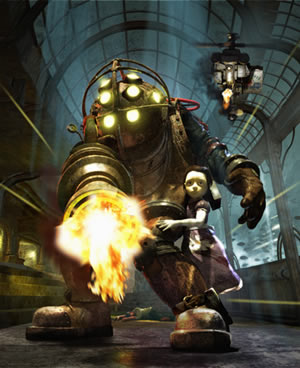
1. Bioshock

"A man chooses. A slave obeys."

Simply put, this is the game that showed me video games can be art. It was the first one I bought for more reasons than "It looks cool and will probably make me feel like a badass". I was sold on the atmosphere and story from the very first trailer, and the critical examination of Ayn Rand's philosophy of objectivism that came along with it was just the icing on the cake. It managed to not only create a compelling world that the player could explore themselves in order to learn more about it, but it even managed to sneak in some meta-commentary about the nature of shooter games as well. An instant classic that will always hold a special place in my heart, right next to the new glands that let me shoot bees out of my arm.


Monday, August 27, 2012

So Now What?

I'm currently at the second time ever in my life where I have no idea what's going to happen next or where I'll be a year from now. This is equal parts incredibly exciting and pants-shittingly terrifying, as I'm sure many of my peers could attest to. The good news is, I had a killer summer. No I don't care if you didn't ask, I'm going to elaborate anyway.

I spent June and July and a bit of August this year in Los Angeles, the first time I'd ever been there, and had basically two internships. One of them was at a film production company, where the bulk of my duties would be reading scripts and writing coverage of them, which is where you give a summary and then your comments and recommendation. The other one was at a Youtube network and production company, which was more business oriented, dealing with organizing and categorizing member channels and stuff like that. Both of them were very enlightening in their own ways, and gave me the opportunity to get a taste of the worlds of both Old and New Media simultaneously.

Whenever people would ask me about these internships, they'd invariably end the conversation by asking if either one of these things would be something I'd want to do after school as a job. And my answer was always "Sort of maybe". To be sure, I had a great time at both of these companies, and not only learned a lot but came away feeling like I could get a job in either of those fields. But would I want to do either one as a career career? Well, that's a different story. I love movies and I consume Youtube videos like there's no tomorrow. I guess I could write scripts or be a creative executive, or even help produce Youtube videos, but when I think about how I really want to express myself creatively, the type of media I'd feel most fulfilled producing...well...


...yeah. I guess I am getting pretty predictable, huh?

Here's the thing: I saw a bunch of movies over the summer, both in theaters and at home with my buds. And they ranged from okay (Prometheus) to pretty good (Ted, Brave) to awesome (Moonrise Kingdom, The Dark Knight Rises, Monsieur Lazhar). I enjoyed going to see all of them, and I really do believe the experience of going to the theater with friends can't be matched or beat. But none of those movies had me talking about them for a full week and a half after I'd seen them. None of them really shook me to my core and got me thinking in a way I don't usually. You know what did? 


Spec Ops: The Line is so good, you guys. Not just as a videogame, but as a piece of mass media that manages to stay with you long after you've put it down, and not for any superficial reasons. I rented the game and played through it in a day, and I'm only now getting over the bulk of the impact it's had on me. I seriously recommend you play this game, because it manages to do so much with the expectations of what a video game should be and can do, not to mention why we play them, that it ended up being my game of the summer, even though I didn't get to play it until a couple weeks ago.

Which got me thinking, and I realized that my interest in movies seems to have become a lot more intellectual, concerned with the craft and the ideas they might play with. This actually explains why Children of Men is my default "favorite movie", because of the way it uses filmmaking techniques to tell a science fiction story that feels so real and examines the world as it might be without shoving that depiction in your face all the time. To be sure, it took every ounce of my strength not to start bawling over the ending of Toy Story 3, but that film was very much an exception rather than the norm.

Whenever I think of moments in media that have really moved me, off the top of my head, pretty much all of my examples come from video games. Bioshock is chock full of environments that suggest so much about the lives of the people who inhabited the city of Rapture, which accomplishes so much more than any expository monologue ever could. The "Minerva's Den" add-on for the sequel contained a story so compact but so poignant that it ended up better than the core plot the game was originally built around (and was so good I may even examine it later on this very blog). The stark, harrowing message about the realities of war contained in the "Aftermath" segment from Call of Duty 4, conveyed entirely through gameplay. The descent into madness you're dragged into by Far Cry 2. Pretty much all of Journey and both Portal games. I could probably keep going if I really wanted to.


It's possible to speculate endlessly about why I feel these moments rush to the fore in my mind rather than something from films or books, because to be sure I don't mean to disparage those mediums. But the participatory elements of video games, the novel ways in which they can deliver their messages, when executed well, have always struck very close to home for me. So I think it would be awesome if, at some point down the line, I got a shot at being a creative director for a video game studio. No idea how I'll get there, but that hasn't stopped me before.


Right now though, I think I'll just focus on graduating in one piece.